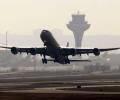
The move if implemented, will be a temporary measure to protect both consumers and airlines. A section of airline executives and experts, however, warned that any intervention in pricing would be counterproductive.
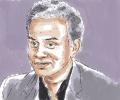
'I'm not surprised with what's happening in India,' 'Tiger' Tyagarajan tells Nivedita Mookerji.

'It's the brazen corruption involving politicians that makes you sit up years after the event,' notes Nivedita Mookerji after reading B K Syngal's Telecom Man.
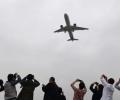
'Indian aviation cannot resume without at least three major airports being functional. If Delhi, Mumbai, Bengaluru, and Kolkata are shut, there is little chance that airlines will start flying even if the government gives the go-ahead.'

Companies across the sector are restructuring payrolls of crew, cutting allowances, and extending leave without pay duration as they realise they will have more aircraft and employees compared to customers.
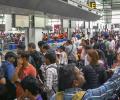
Extended check-in time, frequent disinfection every hour, additional queue managers at entry, exit, boarding point, check-in halls, security check areas and boarding gates, with social distancing markers and reminders - welcome to our airports post-coronavirus.
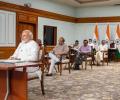
Nivedita Mookerji goes in search of the elusive war room to track and respond to the coronavirus threat.
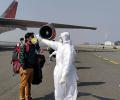
Aircraft lease rentals are fixed costs and account for around 15 per cent of an airline's expense and since these are paid in dollars are also subject to currency fluctuations.
The airlines have instead suggested compulsory personal protective equipment-like suit, gloves and mask for flyers and crew members.

A single format and simpler, uniform rules would have kept the service going. In other parts of the world including in the US, managing demand and capacities along with ensuring preventive measures were an issue, but there was hardly any administrative hurdle anywhere.
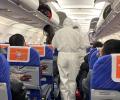
Empty middle seat, no duty-free shopping to be new normal till WHO all-clear.
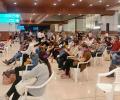
International and Indian airlines are refusing to refund cash and giving credit that can be used later.

A senior official in the central labour commissioner's office said the efforts of the government were to resolve the cases amicably and not to press for legal action against employers. "Everyone is going through tough times. We could initiate legal action if we want but that's not the idea. We want to address the issues amicably," the official said.
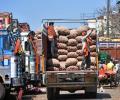
In the last one week several companies have had to face the hurdle of making a distinction between what's essential and what's not. To help them the government has now clarified that grocery would include hygiene products such as hand wash, soaps, disinfectants, body wash, shampoo, surface cleaners, detergents, tissue paper, toothpaste, oral care, sanitary pads, diapers, chargers and battery cells, etc.
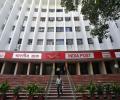
Changing with the times and in compliance with social distancing norms, customers are now picking up their parcels, speed posts and registered letters within the city themselves after they are informed on phone.
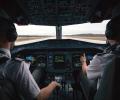
Chief executive officers of airlines have asked the government to bear 50 per cent of three months' salaries of employees.
According to a calculation by the government, India's airlines currently have 633 aircraft of which they may operate only 200.

Key stimuli of the government's relief package will be a tax break on jet fuel, waiver of parking and landing charges at airports for the next six months and deferment of payment to oil companies by three months.
Airlines sought a limited period concession of the standing rule of slot allocation, which mandates that firms must operate at least 80 per cent of their allocated slots.

Executives of Indian airlines said that the drop is primarily for flights to major metro cities like Delhi, Mumbai, Hyderabad, Bangalore, which are the prime revenue generators on the domestic front.
 © 2026 Rediff.com - Advertise with us - Disclaimer - Privacy Policy - Sitemap - Feedback - About us - Terms of use - Grievances